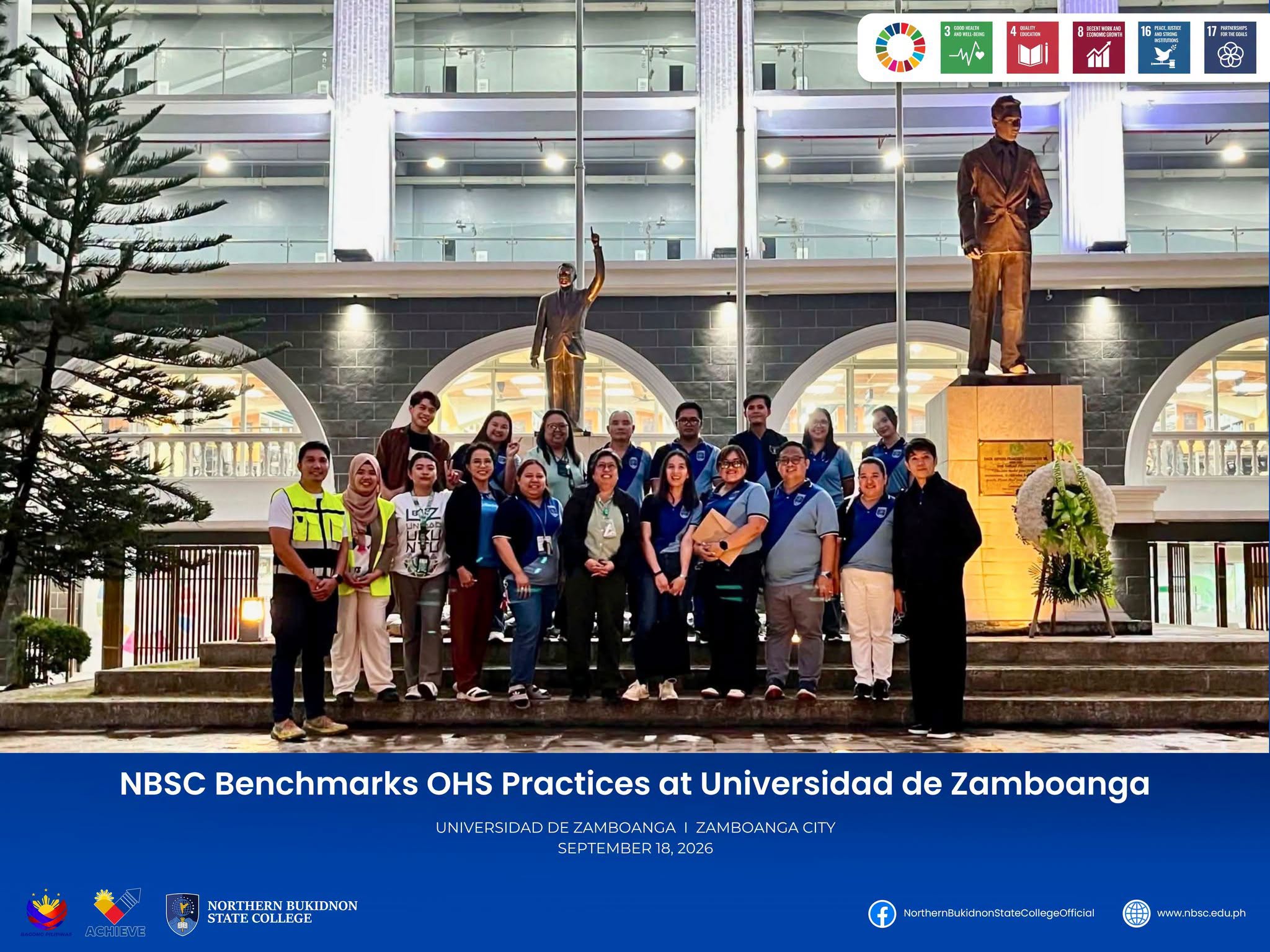
NBSC BENCHMARKS OHS PRACTICES AT UNIVERSIDAD DE ZAMBOANGA
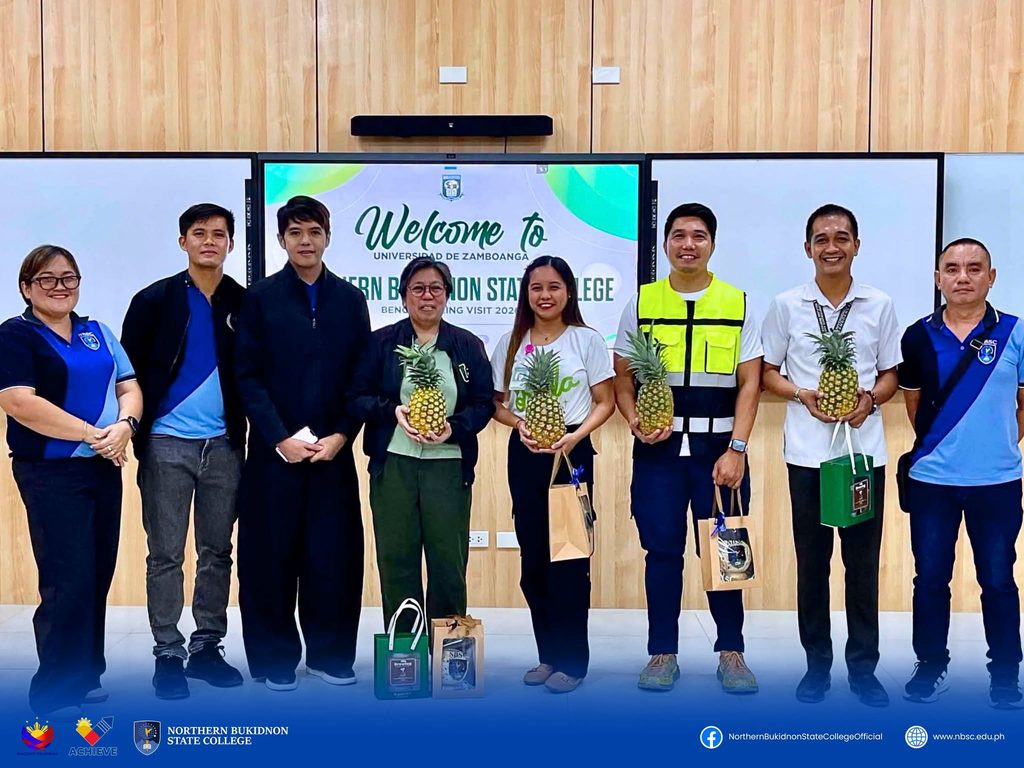
Northern Bukidnon State College (NBSC) conducted a benchmarking visit to Universidad de Zamboanga (UZ) in Zamboanga City on September 18, 2026, as part of its preparations for the implementation of the ISO 45001:2018 Occupational Health and Safety Management System (OHSMS).
The visit included a tour of UZ’s campus, laboratories, and simulation building, providing the NBSC delegation with insights and practices that may help strengthen its own occupational health and safety systems.
The NBSC delegation was led by Karl Clyde Stephen C. Acosta, RN, OHSMS Unit Coordinator, and Dr. Daniel S. Lerongan, Head of the Quality Assurance Office (QAO), along with 11 directors, office heads, and staff members.
NBSC was received by the UZ Safety, Health, and Environment Department (SHED), led by SHED Officer Jessica C. Pacio, together with Safety Officer III Chonimar E. Elloreg, Safety Officer II Engr. Weneira A. Usman, School Nurse Marie Joy A. Quizmundo, and Administrative Assistant Alaiza I. Pano.
The delegation was also assisted by representatives from the Quality Management Systems Department, Internal Auditors Nursalyn Sappayani and Fatiema Diki; the General Services Department, represented by FMS Supervisor Engr. Abdennicer Abdasa and Janitorial Services (JS) Supervisor Ardirc Impe Jr.; and the University Communications Office, represented by Officer-in-Charge Ma. Anavieve Enrique and Frezza Hajal.
The benchmarking visit provided NBSC with practical reference points for enhancing its occupational health and safety practices and advancing its preparations for ISO 45001:2018 implementation. The exchange also opened opportunities for the two institutions to share approaches and strengthen professional collaboration in support of safer and more effective academic workplaces.
For NBSC, the activity can contribute to more systematic safety practices, greater awareness of workplace health and safety responsibilities, and improved institutional processes. These efforts can help create a safer environment for students, faculty, staff, and other members of the academic community while supporting the College’s broader quality improvement initiatives.
Written by: Michelle Darlyne B. Ricarte
Photos by: Quality Assurance Office